

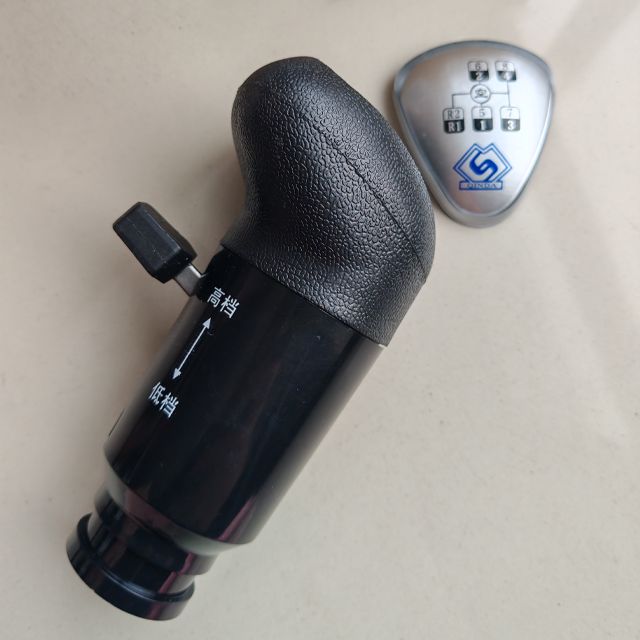
genuine FAST gearshift handlebar, gear shifter, gear lever handle bar rod
genuine FAST transmission gearshift, gear lever, gear stick, shift lever,gear shifter, shift handle, shift lever ball head, transmission preselector valve, shift lever high low gear switch from Weichai authorized leading supplier
The chassis of construction machinery includes not only the powertrain, running gear, steering system, and braking system, but often also features tracks or heavy-duty axles.
The powertrain of construction machinery is responsible for transmitting power from the engine to the drive wheels or tracks; it serves as the core of the chassis's propulsion system.
1) Clutch/Torque Converter: Construction vehicles frequently utilize hydraulic torque converters, which help cushion the impact during heavy-load startups.
2) Transmission: Adjusts rotational speed and torque to suit various operating conditions.
3) Driveshaft: Transmits power from the transmission to the drive axle.
4) Drive Axle/Half-shaft: Includes the final drive and differential, ultimately delivering power to the wheels or track drive sprockets.
The running gear of construction machinery acts as the "skeleton" and "legs" of the chassis, directly determining load-bearing capacity and off-road mobility (terrain traversability).
1) Frame: Typically a heavy-duty structure welded from thick steel plates, designed to support the weight of the entire machine and its operational loads.
2) Axles: Front and rear axles, which transfer forces between the frame and the wheels.
3) Wheels/Tracks: Wheeled machines use heavy-duty tires, while tracked machines employ track shoes, drive sprockets, idlers, and track rollers.
4) Suspension: Wheeled units often use leaf springs or hydraulic shock absorbers, while tracked units typically utilize a balance beam (equalizer beam) structure.
The steering system controls the direction of travel and may employ either articulated steering or skid steering.
1) Steering Gear: Amplifies the input from the steering wheel and converts it into the necessary mechanical motion.
2) Steering Linkage/Tie Rod Ends: Connect the steering gear to the steered wheels, transmitting the steering force.
The braking system is responsible for slowing down and stopping the vehicle; it must meet more rigorous standards due to the heavy-load conditions in which these machines operate.
1) Brakes: Typically pneumatic or hydraulic-actuated drum or disc brakes.
2) Brake lines/wheel cylinders: Transmit braking energy to actuate brake pads or brake shoes, which then generate friction for braking.