

genuine Weichai engine manifold absolute pressure sensor, intake air pressure sensor
genuine Weichai engine parts of manifold absolute pressure sensor MAP, intake air pressure sensor from automotive engine parts manufacturer, weichai parts trading company, weichai authorized supplier
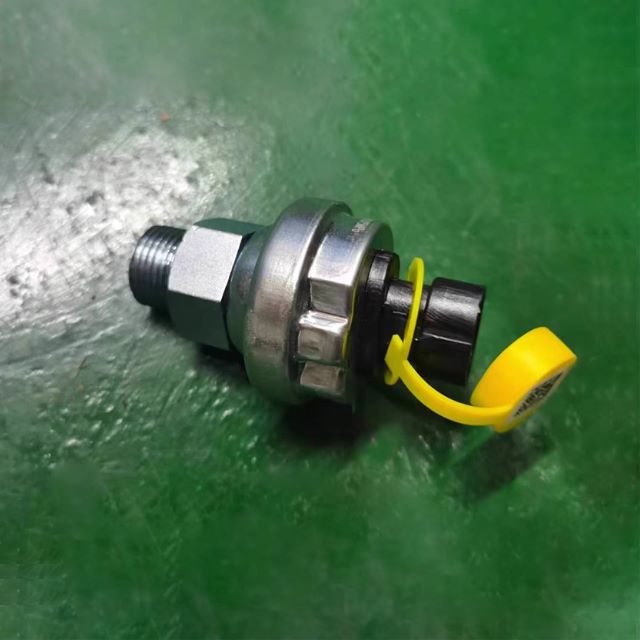
The Weichai Manifold Absolute Pressure (MAP) sensor is designed to detect changes in absolute pressure within an engine's intake manifold. It converts these pressure readings into voltage signals, which are then transmitted to the Engine Control Unit (ECU). The ECU uses this data to calculate the intake air mass and to regulate fuel injection quantity and ignition timing. The output voltage is directly proportional to the absolute pressure within the manifold and inversely proportional to the vacuum level. Consequently, a larger throttle opening results in higher absolute pressure and, in turn, a higher output voltage. The MAP sensor is mounted directly onto the intake manifold or connected via a vacuum hose—downstream of the throttle body, allowing it to sense pressure fluctuations within the manifold. Its primary functions include:
1) For Weichai Engine Control Unit (ECU/ECM): As the primary recipient of the data, the ECU uses the voltage signal from the sensor—in conjunction with engine speed and intake air temperature—to calculate the air mass and determine the baseline fuel injection quantity.
2) For Weichai Ignition System: The ECU utilizes the pressure signal to adjust the ignition advance angle, ensuring optimal performance across various load conditions.
3) For Weichai Turbocharging System: In turbocharged engines, the ECU uses the MAP signal to monitor boost pressure, controlling the wastegate or variable-geometry turbocharger (VGT) to prevent overboost or engine knocking.
Weichai piezoresistive-type sensors leverage the semiconductor piezoresistive effect; they offer fast response times, high measurement precision, and a compact form factor, making them widely used in D-type pressure-based fuel injection systems. Weichai capacitive-type sensors employ a diaphragm that functions as a variable capacitor; as the diaphragm deforms under pressure, its capacitance changes accordingly.


